
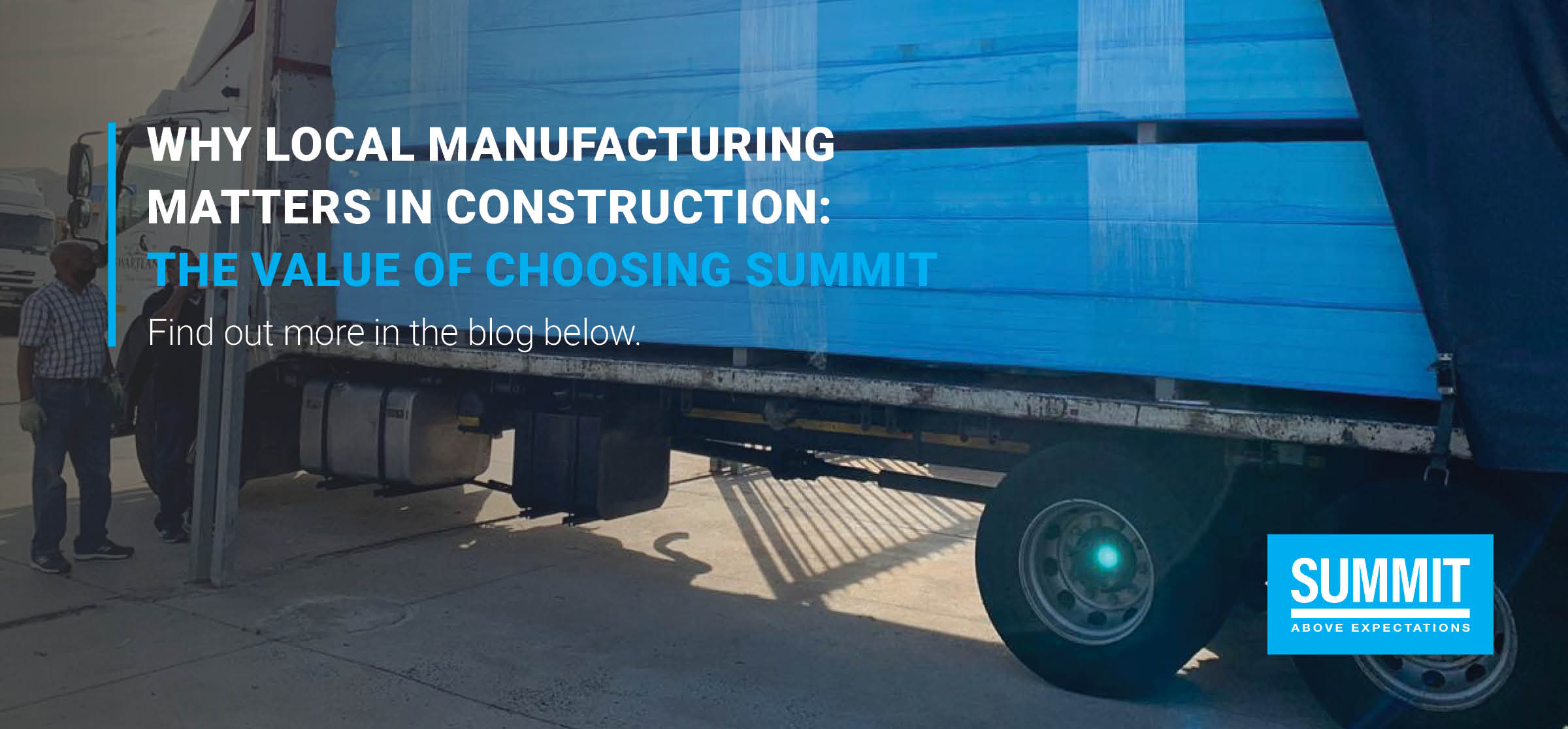
In today's construction industry, choosing building materials involves more than comparing specifications and prices. Product performance, quality, availability, sustainability and access to technical expertise all play a key role in determining the right solution for a project.
Local manufacturing is an important part of this conversation. It supports South African industry, builds local expertise and ensures that the construction sector has access to products developed and manufactured within the local market.
For Summit, it is also about recognising the value of combining local manufacturing capability and expertise to offer a more comprehensive range of insulation solutions.
Supporting South African Manufacturing
Local manufacturing contributes to the broader South African economy through employment, skills development, investment in production capabilities and support for local suppliers. It also strengthens the construction industry's access to locally produced building materials, giving contractors, developers, and specifiers more options when planning their projects.
For building professionals, working with an established local manufacturer offers the opportunity to engage directly with the people and expertise behind the products, from understanding technical specifications to obtaining product guidance. It is an investment not only in building material, but also in the local industry that supports its production and distribution.
Quality and Performance That Matter
The value of a building product comes down to how well it performs in its intended application.
Summit XPS insulation boards are manufactured in South Africa using an extrusion process that produces a rigid, closed-cell structure. This provides thermal insulation, moisture resistance, and high compressive strength, making the boards suitable for a variety of residential, commercial, and agricultural applications.
Available in different thicknesses and profiles, Summit XPS boards can be incorporated into roof, ceiling, wall, and floor insulation systems. Their versatility allows building professionals to select the best solution according to the requirements of each application.
Fire Performance: An Important Part of Building Design
Fire safety is a crucial consideration when specifying building materials. Understanding how different insulation products behave when exposed to fire helps architects, contractors, and specifiers make informed decisions.
Summit XPS has undergone fire testing in accordance with the relevant testing standards, with its reported fire-reaction classification providing valuable information for product specification.
When exposed to fire, Summit XPS boards are designed to shrink away from the heat source rather than support flame spread. However, XPS remains a combustible insulation material and must be specified and installed in accordance with applicable building regulations and the requirements of the application.
Summit's insulation offering also includes imported Knauf Glass Wool, which provides a complementary insulation solution with a different fire-performance profile. Knauf Glass Wool carries an A1 Euroclass fire classification and is non-combustible.
Understanding these differences is important when selecting insulation for different building requirements. The objective is not to find one product for every application, but to choose the right solution for the building and its intended use.
Technical Expertise and the Correct Installation
Even a high-performing insulation product needs to be correctly specified and installed to achieve its intended benefits.
Access to product information, technical guidance, and installation resources helps builders understand the requirements of different applications and make more informed decisions.
Summit provides installation guidance and videos covering applications such as nail-up ceilings, over-truss insulation, over-purlin installations, cavity walls, and floor insulation. These resources help contractors and installers understand the practical considerations involved in working with XPS insulation boards.
Building With Long-Term Performance in Mind
Insulation plays a significant role in improving a building's thermal performance. By reducing the transfer of heat through the building envelope, an appropriate insulation solution can help maintain more stable indoor temperatures and reduce reliance on heating and cooling systems.
The benefits extend beyond immediate comfort. Material durability, moisture resistance, correct installation, and suitability for the intended application all contribute to the long-term value of an insulation system.
Manufacturing processes and transportation also form part of the broader sustainability conversation. Local production can reduce transportation distances for locally manufactured products, while effective insulation can contribute to lower operational energy requirements over a building's lifetime.
Local Manufacturing. Broader Building Solutions.
The importance of local manufacturing extends beyond the production of individual building materials. It is about supporting industry capability, developing expertise, and contributing to a construction sector equipped to meet changing building demands.
Through its locally manufactured Summit XPS insulation boards and complementary international insulation products, Summit brings together varied materials and capabilities to serve a diverse range of building applications.
Because better building decisions start with understanding the requirements of each project.